Natural Pain Therapy: A Holistic Approach to Managing Pain
Find out if you qualify. It takes 30 seconds to check.
TL;DR — Key Takeaways
- Natural pain therapy refers to a broad, supportive approach to pain management that focuses on working with the body. It can include lifestyle changes such as improved sleep, movement, and stress management, alongside physical techniques like physiotherapy, stretching, or mindfulness-based practices.
- This piece explains natural Pain Therapy.
- You'll find details on common Natural Approaches to Pain Management.
- It also looks at lifestyle Factors That Can Influence Pain.
In this article
01
What is Cannabis?
Speak with a specialist clinician today
Fast, discreet, and fully online.
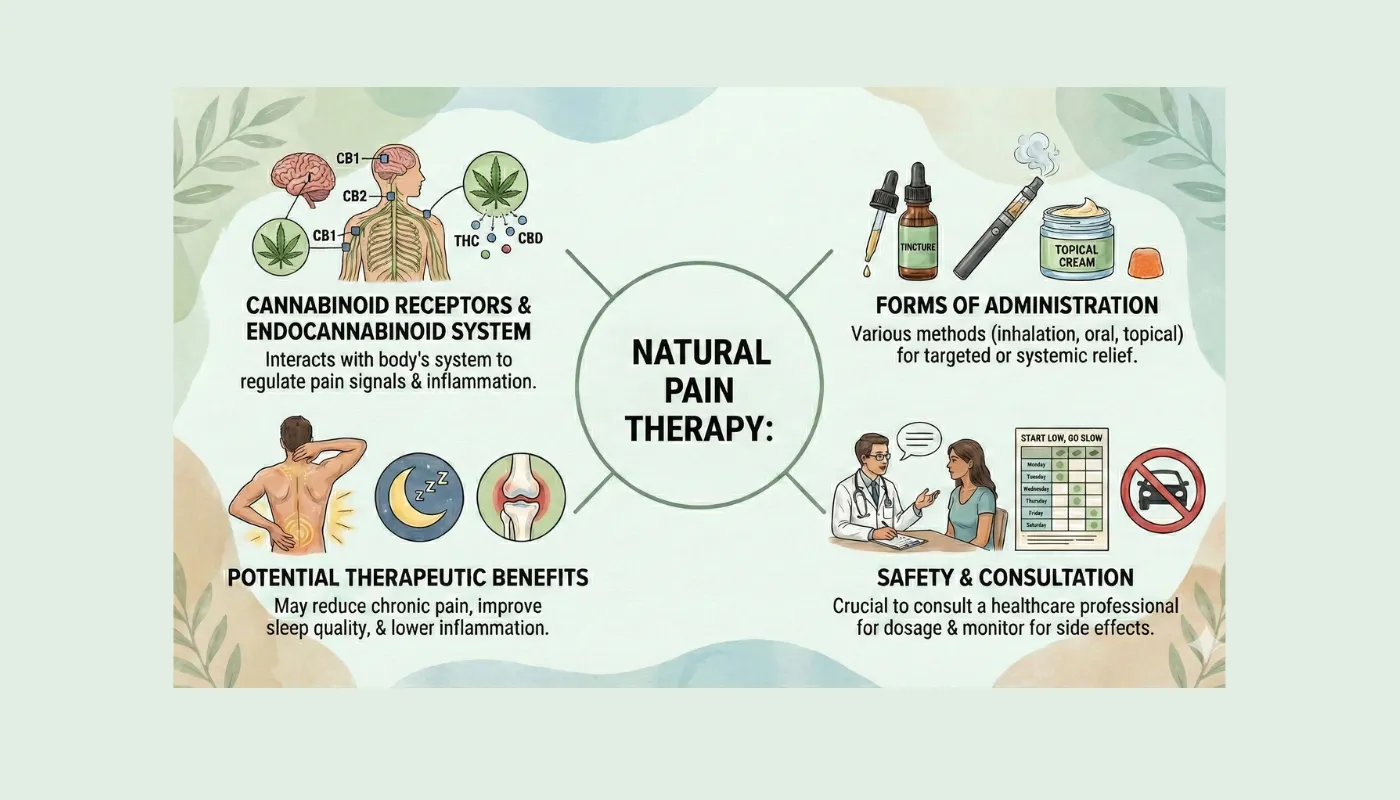
Natural pain therapy refers to a broad, supportive approach to pain management that focuses on working with the body. It can include lifestyle changes such as improved sleep, movement, and stress management, alongside physical techniques like physiotherapy, stretching, or mindfulness-based practices. In some cases, supplements or alternative healthcare options, such as medical cannabis, may also be explored under clinician guidance.
Since 2018, medical cannabis has been legally available in the UK when prescribed by a specialist doctor through licensed clinics like Alternaleaf for 50+ conditions. You can find out if you’re eligible for a medical cannabis prescription by completing the quick questionnaire on our website.
Please note: Cannabis based medicines are prescription-only medicines. They may not be suitable for everyone, and eligibility is determined by independent clinical assessment. Treatment is not first-line and outcomes vary; benefits are not guaranteed, and side effects and risks exist.
Together, these strategies aim to support overall wellbeing, reduce discomfort, and improve quality of life as part of a personalised care plan. And that’s what we’ll be exploring below.
What Is Natural Pain Therapy?
Natural pain therapy is generally used as an umbrella term for non-pharmaceutical or low-intervention approaches that people may explore to help manage pain symptoms.
Rather than focusing on a single treatment, it describes a range of holistic pain management techniques that can be used alongside conventional medical care - and alongside each other. These approaches are typically centred on symptom management and overall wellbeing, with choices guided by individual needs, preferences, and, where appropriate, professional advice.
Common Natural Approaches to Pain Management
Common natural approaches to pain management often focus on supporting the body and mind through everyday, low-intervention strategies. As we mentioned above, these approaches may be used on their own or alongside conventional treatments, depending on individual circumstances and clinical advice. Some common natural pain management in the UK approaches include:
- Gentle physical activity: such as stretching, walking, or mobility exercises to support movement and reduce stiffness.
- Relaxation techniques: including breathing exercises, mindfulness, or meditation to help manage stress and tension.
- Hot and cold therapy: using warm packs or ice to ease muscle discomfort or inflammation.
- Sleep optimisation: improving sleep routines and environments to support recovery and pain tolerance.
- Psychological support: such as talking therapies or counselling to help address the emotional impact of chronic pain.
Lifestyle Factors That Can Influence Pain
Pain isn’t just about physical injury. How we move, how stressed we feel, how well we sleep, and our emotional wellbeing all have the potential to reduce pain, but can also possibly make it worse.
For example, gentle movement may help support flexibility and reduce stiffness. But pushing your body too far, and moving too hard too fast, may have the opposite effect. So, listening to your body is key. High stress levels can sometimes make pain feel more intense. Poor sleep may also lower the body’s ability to cope with discomfort, and low mood or anxiety can influence how pain is perceived.
Making changes to your lifestyle to support these areas doesn’t treat the cause of pain, but it may potentially help some people feel more comfortable and better able to manage their pain and symptoms day to day.
Holistic Pain Supplements: What People Commonly Explore
Many people explore supplements such as turmeric (curcumin), omega-3 fatty acids, magnesium, and herbal options as part of natural approaches to managing discomfort and pain. Some clinical studies suggest these nutrients may influence inflammation or pain pathways. For example, research conducted on randomised trials suggests omega-3s may potentially moderately reduce chronic pain intensity.
Turmeric and curcumin extracts have also been studied for joint pain and musculoskeletal symptoms, with some trials indicating potential benefits.
However, evidence is limited, and results vary by condition, dose, and study quality. Because supplements can sometimes interact with medications and may not be suitable for everyone, it;s always best to speak to your doctor or clinician and follow professional medical advice.
When Natural Pain Therapy May Not Be Enough
If you’re suffering from a diagnosed chronic medical condition, natural pain therapy may not be enough.
Persistent or severe pain should always be assessed by a healthcare professional, especially if it lasts for weeks, worsens over time, or interferes with daily life. While self-management strategies may help support comfort for some people, alone they’re not a suitable treatment option for chronic pain conditions.
Chronic pain can be complex and may signal an underlying condition that requires specialist care, tailored treatment, or ongoing clinical support. So it’s important to speak to a healthcare professional for medical evaluation, and possible diagnosis.
Medical Cannabis and Pain Relief
Medical cannabis has been legal by specialist prescription in the UK since 2018 and is prescribed on a case-by-case basis.
To be eligible for a medical cannabis prescription in the UK, you’ll need a diagnosis of a qualifying condition and evidence of being offered at least two conventional treatments for that condition. Medical cannabis can only be prescribed by specialist doctors, and prescriptions are only available to eligible patients under doctor supervision - usually through licensed medical cannabis clinics like Alternaleaf.
It’s only prescribed when other conventional treatments have not been effective or have caused unwanted side effects. This ensures that patients receive it only when clinically appropriate, as part of a regulated and supervised care plan.
If you’re pregnant or have a history of psychosis or schizophrenia, you won’t qualify. Treatment is carefully monitored and tailored to individual needs, and you can easily find out if you qualify by completing our 30 second eligibility checker.
We’ll decide if you’re likely to qualify for treatment or not based on the information you tell us. And if you are likely to qualify, you can book an initial assessment with one of our pharmacists. You’ll then have a doctor consultation where your medical history is assessed. If you’re approved, your medication will be dispensed from your chosen pharmacy.
That’s a light overview of the process. It’ll be explained in a lot more detail during your appointments, and we’ll send you more information via email after you book your first appointment with us. We’ll give you medical oversight from specialist clinicians at every stage of your medical cannabis journey.
Is Medical Cannabis Legal for Pain Management in the UK?
In 2017, a review of around 10,000 studies concluded there is “substantial evidence” to support cannabis for chronic pain. Pair this with the fact medical cannabis was legalised in the UK in 2018, and there is newfound hope among healthcare experts and patients. You can read more about medical cannabis for pain management in the UK and the science behind it here.
As we said above, in the UK, medical cannabis is only legal if you have a valid prescription from a licensed clinic. It can only be accessed following an assessment by a specialist doctor. It’s not considered a first-line treatment, meaning it’s typically prescribed when standard treatments have not worked or caused unwanted side effects. This regulatory approach ensures that medical cannabis is used appropriately, under clinical supervision, and only where there is a clear medical need.
Choosing the Right Pain Management Approach
We encourage you, or anyone you know who may be suffering from chronic pain, to discuss pain management options with qualified healthcare professionals. They can help assess your symptoms, medical history, and individual needs.
A personalised approach allows treatment plans to be tailored to you specifically, combining appropriate therapies, lifestyle support, and medical guidance where needed. And this may include some natural pain therapy techniques, or even medical cannabis. But remember what we said above about what you need to qualify for a medical cannabis prescription. And again, it’s best to discuss with and take advice from the professionals.
This collaborative process helps ensure that pain is managed safely, effectively, and in a way that aligns with your overall health and lifestyle.
Summary
That’s a brief overview of natural pain therapy and chronic pain alternatives in the UK. But remember, this is not medical advice.
If you’re considering medical cannabis, the best thing to do is speak to your clinician, or seek the help of a licensed medical cannabis clinic like Alternaleaf. Find out if you’re eligible by heading to our website and completing our 30 second eligibility checker.
What is natural pain therapy?
Natural pain therapy is an alternative approach to pain management that can include a number of things such as lifestyle changes or mindfulness practices.
Can natural pain therapy replace medical treatment?
Natural pain therapy is generally used alongside, not instead of, medical treatment. You should always follow the advice of a qualified healthcare professional, and seek their help if you’re experiencing severe chronic pain.
Is medical cannabis an option for pain management in the UK?
Yes, chronic pain is one of over 50 conditions we prescribe for at Alternaleaf. To be eligible you’ll need a diagnosis of a qualifying condition, such as chronic pain, have been offered at least two conventional treatments for that condition, and not be pregnant or have a history of psychosis or schizophrenia. We’ve got more information on eligibility here, or you can head to our website and complete our 30 second eligibility checker.
Is medical cannabis a first-line pain treatment?
No. To qualify for a medical cannabis prescription, you need to have been offered at least two conventional treatments for your diagnosed condition. These treatments can include medication, talking therapy, physiotherapy, surgery and anything else prescribed by your GP.
Speak with a specialist clinician today
Fast, discreet, and fully online.
.webp)
Author
Nicole Wyer
Reviewer
Alternaleaf Medical Team
Our expert team provide insights to ensure accuracy throughout our blog.
Speak with a specialist clinician today
Fast, discreet and fully online.